According to Scott Turner, the Biden administration has perfected a new form of political repression.
Not the loud kind with indictments, subpoenas, or leaked tax returns. This version is subtler, quieter, and far more devious. It involves housing regulations, academic theories, and a civil rights doctrine so obscure that even most lawyers need a footnote to remember what it is.
The charge hinges on disparate impact theory, a long standing legal concept that allows civil rights enforcement when policies harm protected groups, even without explicit intent. Turner insists that Biden’s HUD is abusing this theory to punish political opponents. The problem is simple and fatal to the argument. No political opponents are actually identified.
This, we are told is, “political weaponization by Biden.”
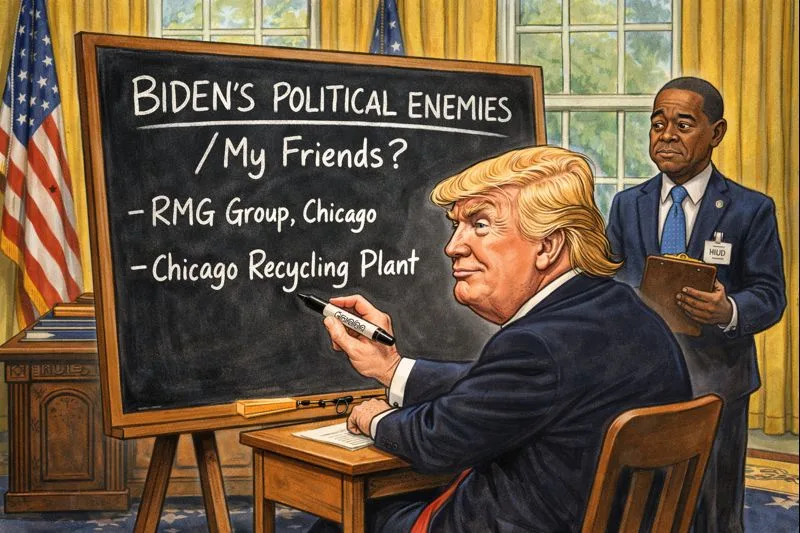
Instead, we get a recycling facility in Chicago, an appraisal trade group, and a generalized complaint that regulators are enforcing laws Turner does not like. Apparently, the Deep State has decided its best way to crush dissent is through zoning disputes and scholarship funds.
If this is political targeting, it is remarkably shy about it.
There are no conservative lawmakers named. No right leaning activists. No donors, candidates, or media figures. Just industries running into regulatory enforcement and being recast as victims of partisan persecution. It is less a scandal than a policy disagreement dressed up in emergency language.
The article’s logic requires the reader to believe that enforcing civil rights laws is itself evidence of tyranny, but only when the enforcement produces outcomes conservatives dislike. When enforcement disappears, that is freedom. When it exists, that is oppression. Intent is irrelevant unless it favors the argument.
Meanwhile, Back in the Real World
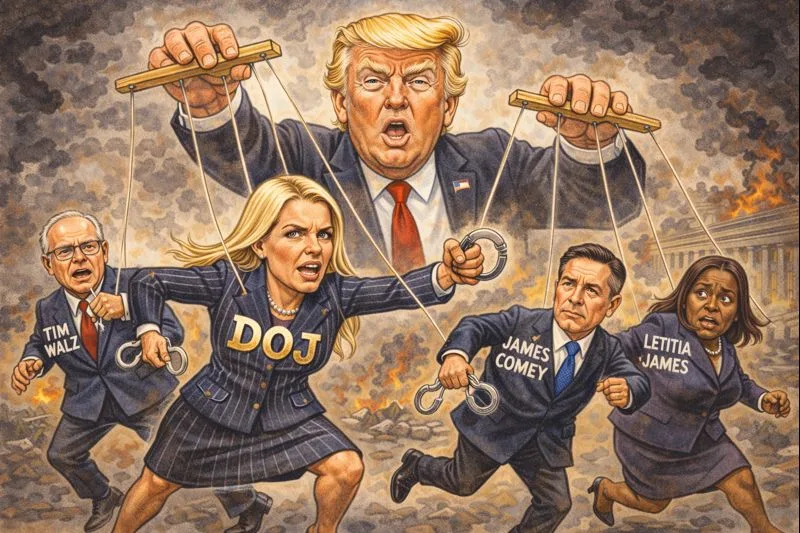
The satire becomes unavoidable when this is contrasted with actual, documented weaponization of government power.
Under Donald Trump, the Department of Justice was openly pressured to investigate political enemies by name. The president publicly demanded prosecutions of Hillary Clinton, James Comey, and others. He labeled judges enemies, prosecutors traitors, and law enforcement officials corrupt unless they served his interests.
More recently, reporting has shown Trump allies and federal agencies scrutinizing personal mortgage records and financial disclosures of critics like James Comey and New York Attorney General Letitia James. These efforts relied on aggressive interpretations of privacy and financial reporting rules, not to enforce neutral law, but to find leverage, embarrassment, or criminal exposure against specific individuals who challenged Trump’s authority.
That is what weaponization looks like. It has targets. It has intent. It has names.
Words Matter, Even When They Are Misused
Calling HUD enforcement “weaponization” drains the term of meaning. If every regulatory action becomes political persecution, then the concept no longer describes abuse of power. It describes governance itself.
Satire aside, the real danger is not that civil rights law is being enforced too aggressively. It is that the public is being trained to see any enforcement of law as illegitimate unless it benefits their side.
If zoning disputes are tyranny, then subpoenas become justice. If scholarship funds are oppression, then personal financial surveillance becomes accountability.
And if everything is weaponization, then nothing is.
Which, perhaps, is the point.