
The Trump White House insisted foreign policy was finally being run like a business.
No more freeloaders. No more favors. Everything would be transactional, efficient, and hard-nosed. Which is why it is useful to read the paperwork and see just how flexible those principles became once deportations were on the table.
According to internal U.S. government documents reviewed by the Associated Press, South Sudan agreed to accept deportees from the United States and then followed up with a list of expectations. One was sanctions relief for a senior South Sudanese official facing U.S. restrictions over corruption and human rights concerns. Another was more ambitious. South Sudanese officials also raised the idea that the United States could pursue legal action against that official’s political rivals living abroad. The requests were documented, discussed, and circulated through normal diplomatic channels. No one treated them as unusual.
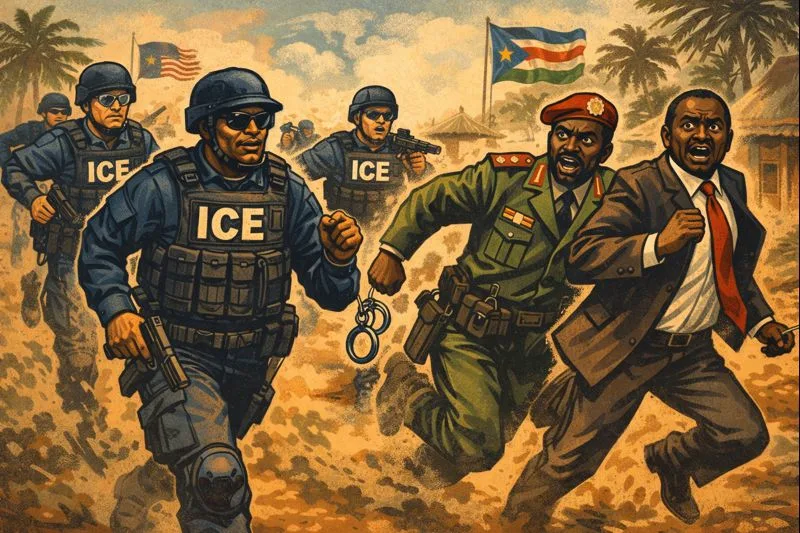
This was not a rogue conversation or a mistranslated aside. It happened during meetings and email exchanges as part of ongoing negotiations over deportations. Immigration enforcement, in other words, had become leverage not just for border optics but for foreign political score settling.
That framing fits neatly with the worldview of Donald Trump, whose administration regularly portrayed law enforcement, sanctions, and diplomatic pressure as interchangeable tools. Justice was something you applied when it was useful and waived when it got in the way. The rhetoric at home was “law and order.” Abroad, it was more like “available upon request.”
South Sudan is a fragile country with a history of internal conflict and repression. The idea that the United States might be asked to help target political rivals should have triggered immediate resistance. Instead, the documents show a process focused on managing the ask, not rejecting the premise. Sanctions and prosecutions were discussed in the same bureaucratic tone as flight logistics.
Nothing in the record shows the United States actually agreeing to prosecute anyone on South Sudan’s behalf. What matters is that the request fit the moment well enough to be entertained at all. Deportations went forward. Expectations were logged. Lines that are supposed to be bright stayed comfortably dim.
The deals were not secret. They were just quiet. That may be the most revealing part.
References
[AP] Associated Press, “After accepting US deportees, South Sudan wanted sanctions relief for top official, documents show.”
https://share.google/k9ovzR2gndZkHf4fc