Trump Pardons Convicted Drug-Trafficker — Even as He Targets a Sitting “Narcotics Kingpin” Abroad
In a move raising serious questions about consistency in U.S. drug-policy and foreign-policy posturing, Donald J. Trump has pardoned Juan Orlando
Hernández — a former head of state convicted in March 2024 of conspiring to import hundreds of tons of cocaine into the United States. Hernández, who led Honduras from 2014 to 2022, was sentenced to 45 years in prison after prosecutors showed that he accepted millions in bribes from major trafficking organizations and used state resources to funnel drugs and provide protection to traffickers. Under U.S. law enforcement and justice-system findings, he helped build a “cocaine superhighway” — one of the largest narcotics conspiracies in modern times.
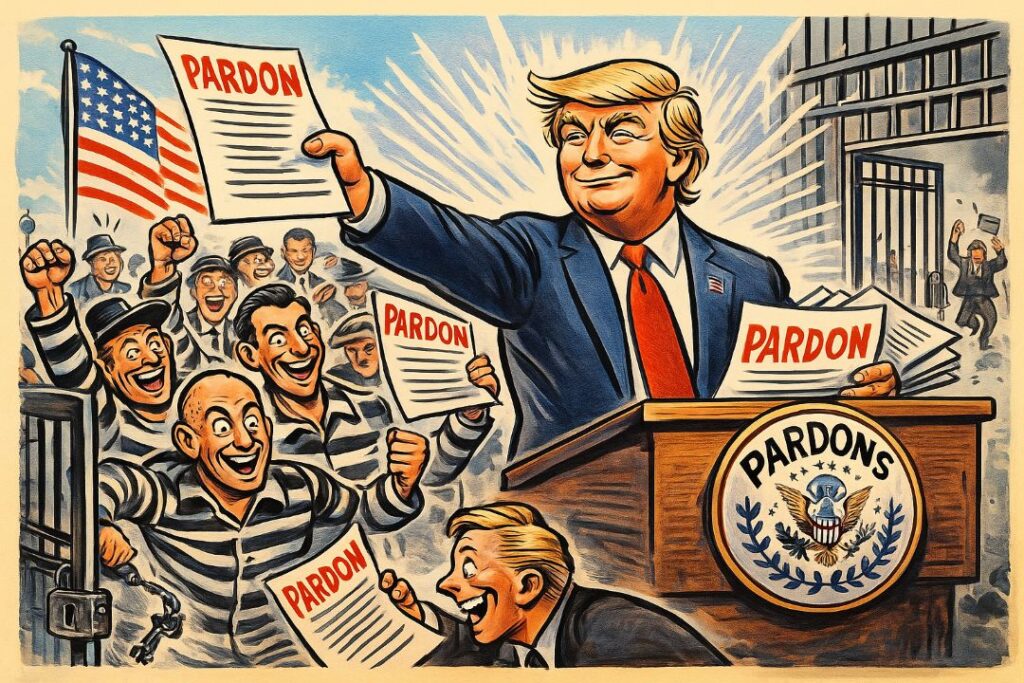
Yet, late November 2025, Trump announced a “full and complete pardon” for Hernández, claiming the ex-president had been “treated very harshly and unfairly.” Within days, Hernández was released from a high-security prison in West Virginia.
At the same time, the Trump administration has ramped up rhetoric — and real-world military and diplomatic pressure — against Nicolás Maduro, the president of Venezuela, accusing him of heading a “narco-regime” and effectively labeling him a drug-dealer. U.S. officials have used Maduro’s alleged trafficking ties to justify sanctions, possible use of force, and broad efforts to isolate Venezuela internationally.
That discrepancy has many observers calling the pardon hypocritical. As noted by a former senior agent in the Drug Enforcement Administration (DEA), the pardon undermines decades of U.S. counter-narcotics credibility. “It just shows that the entire counter-drug effort … is a charade — it’s based on lies, it’s based on hypocrisy,” the agent said.
In other words: the U.S. pardons a convicted drug-kingpin — a former president — while simultaneously arguing that a current head of state (Maduro) must be treated as a narco-terrorist. The contrast is stark, and the irony is unmistakable.
As critics note, this isn’t just a matter of political optics. It raises fundamental questions about the consistency and integrity of U.S. drug-policy enforcement — both domestically and abroad.